A different take on coping with holiday stress: How to have a miserable holiday, tips from psychologist Dr. Randy Paterson

Dr. Randy Paterson from Changeways Clinic shared his tips on how to have a miserable holiday with CBC earlier this month.

Dr. Paterson’s post highlight some of the tips from the CPA on coping with holiday stress, but rather than focused on how to cope, it focuses on how to increase the chance you will be  miserable this holiday season.

1. Fuel relationship fantasies

2. Cast a Christmas special

3. Drink too much, often

4. Have the expectations of a five-year-old

5. Overcommit to everything

For the full article click here.

About Changeways

Changeways Clinic is a psychologist-owned counselling and psychotherapy service in Vancouver Canada. Changeways provides therapy services to help people deal with a wide range of challenges, including depression, anxiety, panic, obsessive compulsive disorder, eating disorders, parenting, sexuality, and problems associated with major life changes, including transitions, bereavement, and coping with pain and health issues. We also provide coaching for enhanced life satisfaction.

I am one of the 14 psychologists that provide therapy services at Changeways.

Check out the Changeways site for more information and how to make an appointment.


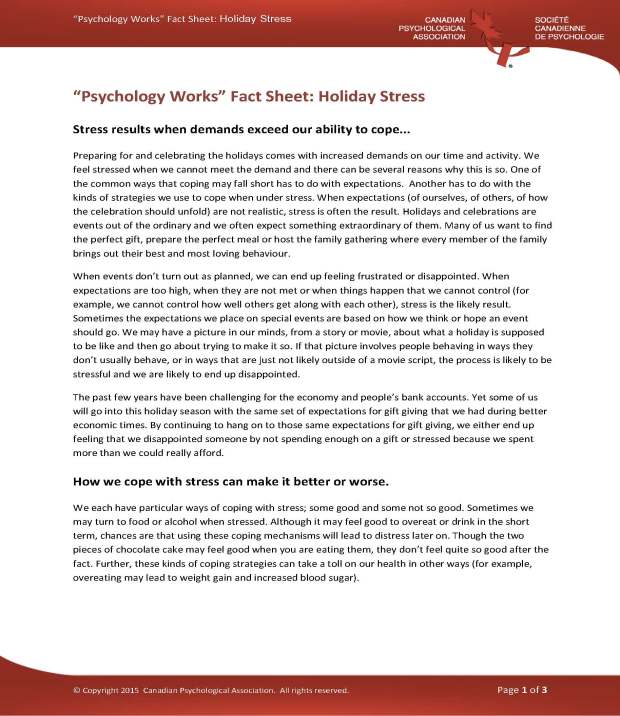
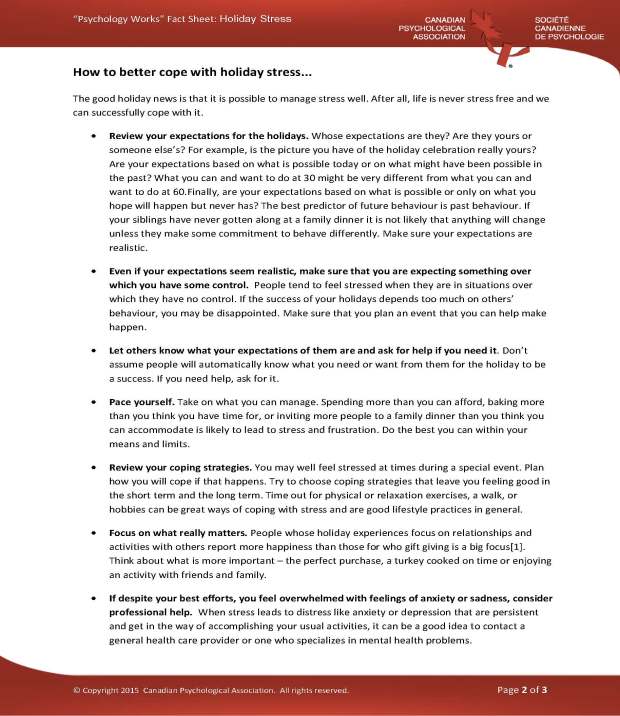
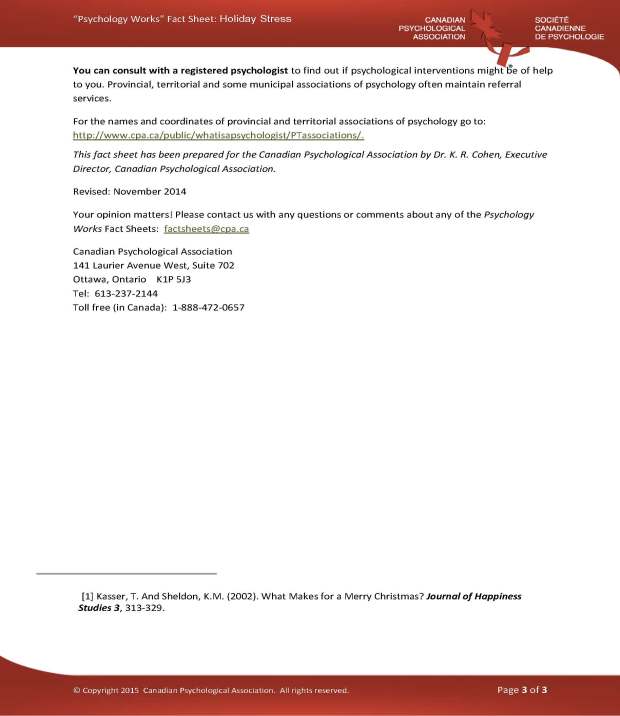
Coping with holiday stress

Review your expectations 

Pace yourself

Focus on what really matters

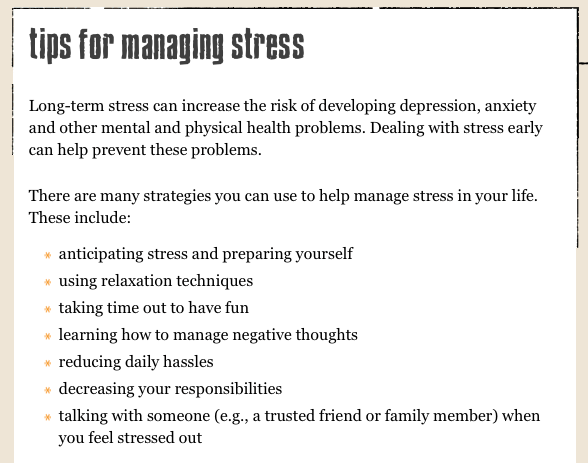
December is here and that means holiday activities, event, and expectations for many of us. The Canadian Psychological Association has a great short “Psychology Works” fact sheet for tip on how to manage holiday stress. Be sure to review early as many of these strategies help to prevent the experience of stress over the holidays. Tips for coping with stress including: review your expectations, pace yourself, and focusing on what really matters. Check out the full fact sheet here.

PsychologyWorksFactSheet_HolidayStress_Page_1PsychologyWorksFactSheet_HolidayStress_Page_2PsychologyWorksFactSheet_HolidayStress_Page_3

“Heads Up Guys” – A resource for managing and preventing depression

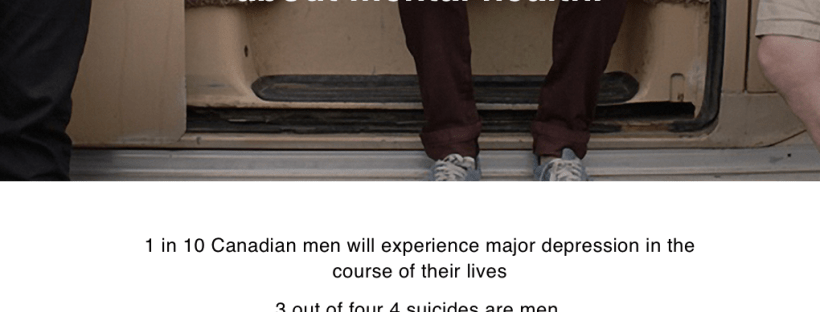
The University of British Columba and the Movember Foundation have teamed up to offer a resource website called “Heads Up Guys” offering information for managing and preventing depression. The site is geared toward men, “for men, about men” as the site says.

Many people are familiar with the Movember campaign, and Heads Up Guys has been funded in part by the Movember Foundation. One target of the foundation is men’s mental health and suicide prevention.

For more information on Heads Up Guys read about the project here.


Home

Brain Injury Resource Alert: brainstreams.ca

A resource dedicated the sharing of information on acquired brain injury in BC provides tons of helpful information on brain injury: http://www.brainstreams.ca

From “Concussion 101” facts, to where to find resources in your community, the site provides a comprehensive, easy to use platform for getting information on brain injury.

The site also features videos, including this older, but great overview of brain injury from GF Strong called “What is a brain injury?”. Check it out!


Mental Health at Work, Oct 10th is World Mental Health Day!

The theme for World Mental Health Day is mental health in the workplace.

Looking internationally, the Mental Health Foundation in the UK offers a guide for how to support mental health at work. For the full guide see this link.

Recommendations from the Mental Health Foundation guide include:

  1. Talk about your feelings

  2. Keep active

  3. Eat well

  4. Drink sensibly

  5. Keep in touch

  6. Ask for help

  7. Take a break, etc.

See also my post on 13 Factors that Can Impact Mental Health in the Workplace from Mental Health Commission of Canada.

Mental Health Awareness Week + Bounce Back

October 1 to 7th is mental health awareness week.

CMHA has launched an awareness campaign using a drone in Vancouver, BC. For the details see “Drone Disguised as a Cloud Illustrate Important Point About Depression“.

With this CMHA has reminded Canadian of resources offered through CMHA and in BC in particular, including their program “Bounce Back”: see www.bouncebacktoday.ca.

“Bounce Back® is a free, evidence-based program for mild to moderate depression and/or anxiety, which is now available to anyone ages 15 and up. Users work through exercises online, or with a doctor’s referral a Bounce Back coach works with them by phone.”


How do you get effective psychological treatment? CPA offers some guidance!

The Canadian Psychological Association offers some guidance on getting effective psychological treatment:

Getting the Best Psychological Help:
Your Guide to Seeking Effective Psychological Treatment

The guide offers answers to questions like,

  • What is effective psychological treatment?
  • Why is it important that my psychologist is using Evidence-Based Practice?
  • How do I select a psychologist who follows Evidence-Based Practice?
  • What is treatment monitoring and why is it important?

For more information on the type of evidence-based treatment I offer in and around Vancouver, BC, see my treatment page. I am happy to answer any questions about my practice, please contact me for more information.