See https://cpa.ca/corona-virus/ for up to date information on Corona Virus – Covid-19 from the Canadian Psychological Association
Internet tool to monitor for mood and cognition symptoms and functioning by UBC: MoodFX

Psychology Works: Bipolar Disorder
The Canadian Psychological Association has a serious of “Psychology Works Fact Sheets”. While there are many important topics covered, I would like to highlight the Psychology Works for Bipolar Disorder Fact Sheet.
Bipolar disorder is often not well understood and many people do not know about the effective psychological treatments we have for Bipolar Disorder. This factsheet gives the basic information you need to know about the disorder and about what evidence-based treatments we have for the condition.
What is depression?
There is a TON of information out there on depression. For some, we learn better from watching than reading on a topic. Dr. Patterson has a course on “what is depression” offered online. Learn at your own pace from a Registered Psychologist.
From the presenter, Dr. Randy Patterson:
This course describes the nature of the most common mood disorders – including major depression, dysthymia, and bipolar disorder. We review the symptoms used in making the diagnosis, and the challenges in properly diagnosing a problem for which there is no simple blood test.
The course provides a model – the Floating Diamond – for breaking down and understanding the various elements of the depressive experience. Using it, we discover that depression is not, in fact, a mood disorder. It is a disorder of virtually everything: physiology, thoughts, behaviour, and, yes, emotion.
We explore a central problem in depression: the fact that symptoms (such as sleep disruption) tend to feed back and intensify the disorder. Depression is not simply a vicious circle – it is a COLLECTION of vicious circles, all working at once.
We move beyond the diagnostic criteria to discuss the additional symptoms and aspects of the depressive experience, exploring factors such as brain fog, memory disruption, sexual problems, and more.
PLEASE NOTE: Depression is an enormous topic, and in this course we are mainly focussed on the experience of the problem. We do not go into detail about either causes or treatment approaches – these are covered in other courses. As well, this course is not a substitute for treatment, which should be carried out with the help of a qualified healthcare professional. We also caution against any attempt at self-diagnosis.

Finding Effective Psychological Treatment
Ever wonder where to start when finding an effective psychological treatment? Division 12 of the American Psychological Association has a great resource that outlines effective treatments for various psychological conditions.
From the site:
“The purpose of this part of the website is to provide information about effective treatments for psychological diagnoses. The website is meant for a wide audience, including the general public, practitioners, researchers, and students. Basic descriptions are provided for each psychological diagnosis and treatment. In addition, for each treatment, the website lists key references, clinical resources, and training opportunities.
The American Psychological Association has identified “best research evidence” as a major component of evidence-based practice (APA Presidential Task Force on Evidence-Based Practice, 2006). The pages in the blue pull down bar above describe research evidence for psychological treatments, which will necessarily be combined with clinician expertise and patient values and characteristics in determining optimum approaches to treatment.”
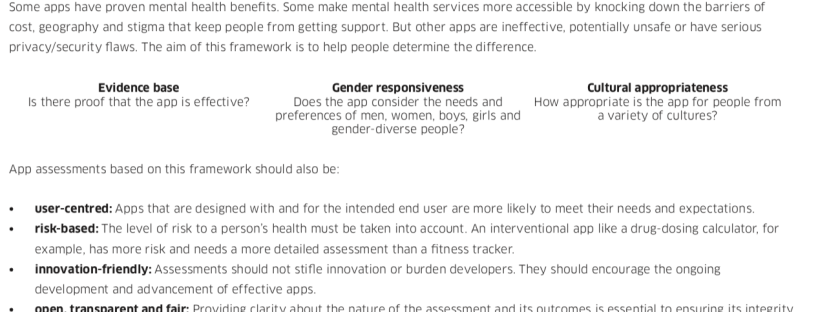
How to chose the right mental health app for you (that is reliable and effective!)
The Mental Health Commission of Canada just put out an assessment framework on how to chose a mental health app. This framework highlights some critical areas to consider when deciding what app to use for yourself or to recommend for clients.
Check out the guide here.
MindHealth BC: Info & Resources to Start Feeling Better
A new resource in BC helps streamline where you can get help for yourself or for someone you care about: read, by not getting overwhelmed by the millions of search results when you google “anxiety” or many other mental health challenges.
Check-out the A to Z resource list here.
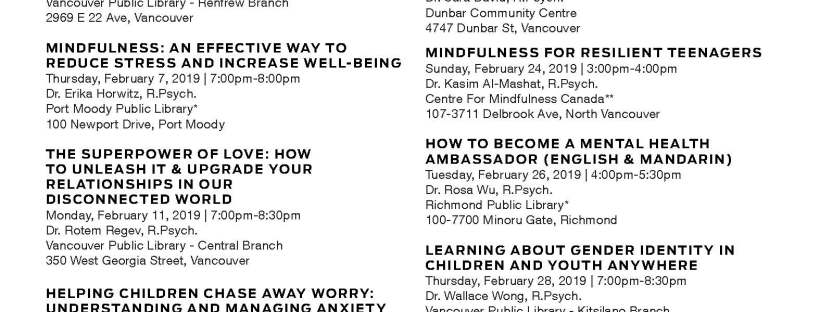
It is Psychology Month! FREE LECTURES IN BC
February is psychology month and the BCPA is hosting a number of interesting free psychology lectures around BC.
For full event details see the BCPA website.

#bellletstalk
January 30 is Bell Let’s Talk Day.

The goal of the campaign is to reduce the sigma of mental illness and to ‘start a conversation’.
The campaign offers five ways to do so:
- Language matters; words matter.
- Education yourself.
- Be kind.
- Listen and ask.
- Talk about it.
Check out Bell Let’s Talk for more information.
The website also offers tons of great resources of mental health and seeking treatment and support for a range of difficulties, including depression, mood disorders, schizophrenia and has specific resources for seniors, youth, for families and caregivers, and more.
#bellletstalk
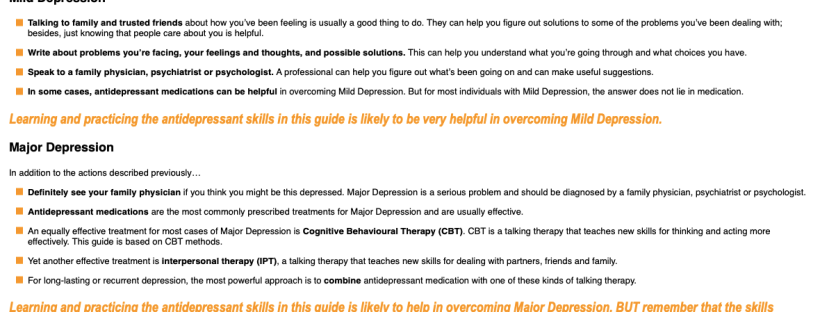
FREE resource: Antidepressant Skills Workbook
Check out this free resource for depression: “The Antidepressant Skills Workbook” by Dr. Bilsker and Dr. Patterson. I particularly like how there are concrete suggestions for what to do about mild or major depression. Check it out here!
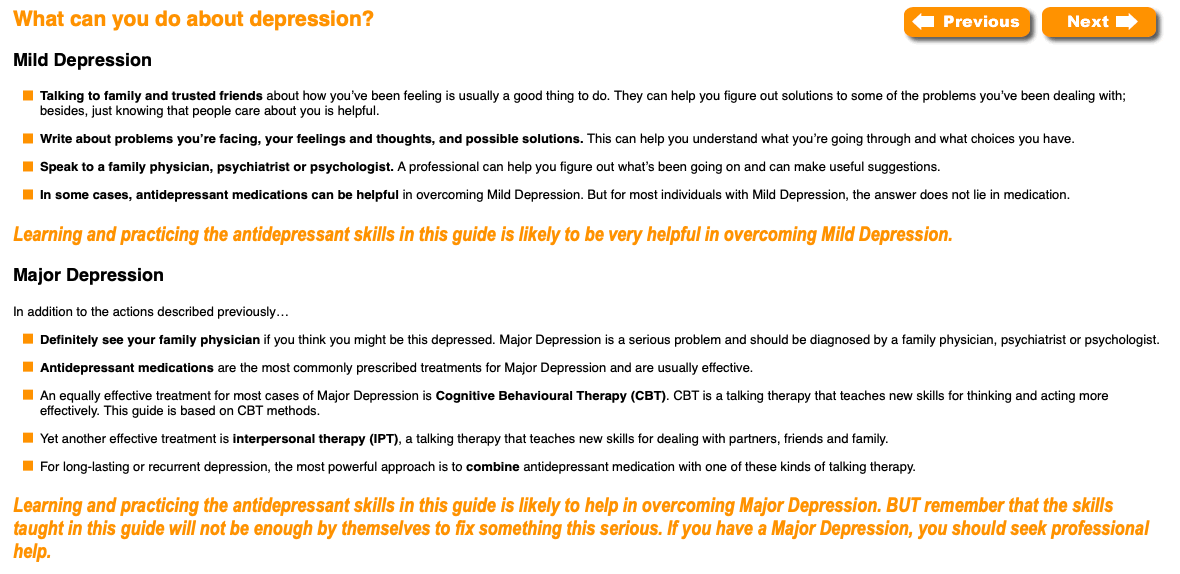
Source: http://www.comh.ca
 Dr. Alana Cook